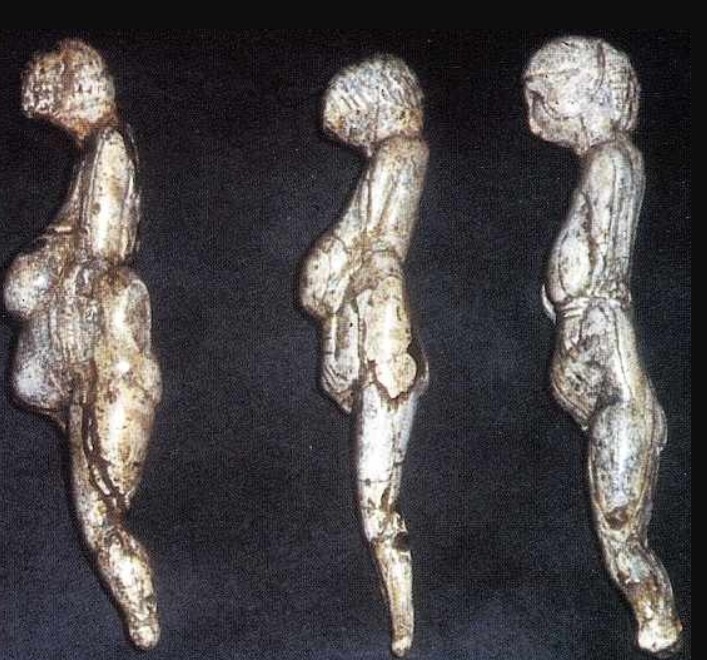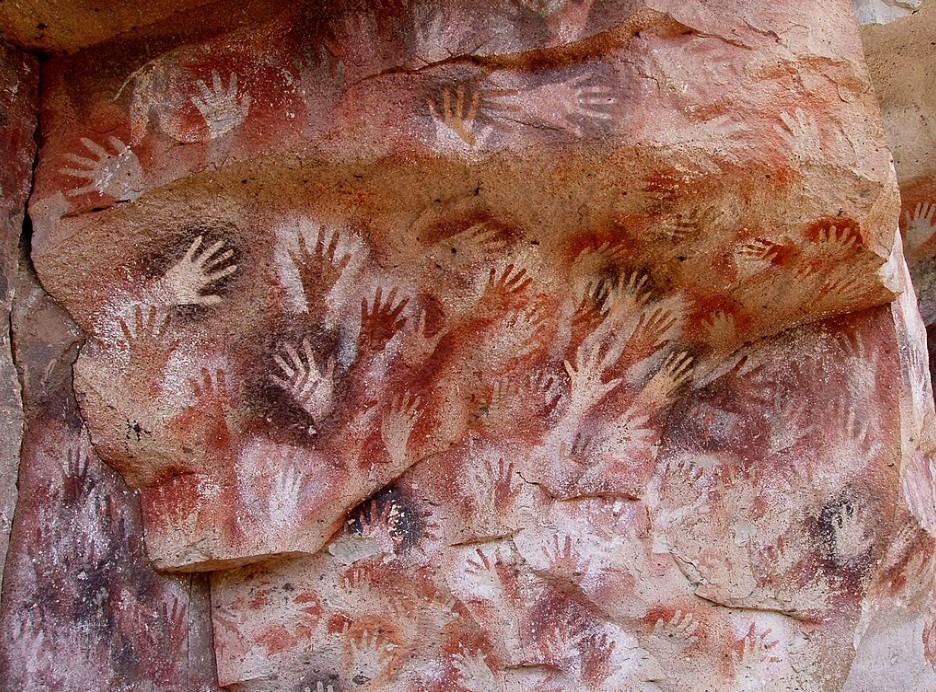
Understanding the paleolithic is like doing a jigsaw with missing pieces and no picture. You have a handful of clues but a lack of essential knowledge. Pre-history is the jigsaw where, in the absence of written records, it’s become the site of assumptions and hypotheses.
I love it!
Back in September, a post titled Lets talk about ancient female statuettes examined the Venus of Willendorf (currently dated @30,000 years) and the Venus of Hohle Fels (@40,000 years), among others.
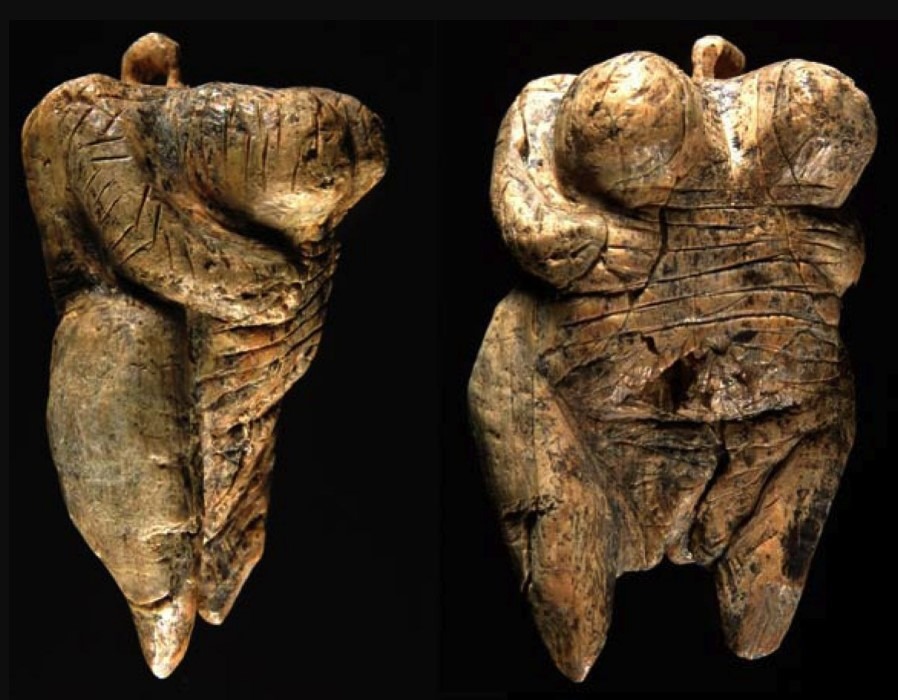
With an assortment of plus-side hips, breasts, abdomens and buttocks, over 200 female statuettes have been discovered so far. A chronological timeline can be found here and alphabetical list here.
Examples are shown below, labelled from left to right.
- Tan Tan Venus found in Morocco, over 300,000 years old.
- Venus of Berekhat Ram found in Israel, over 250,000 years old.
- Venus of Galenberg found in Austria, @30,000 years old.
- Venus of Monpazier found in France, @25,000 years old.
- Moravany Venus found in Slovakia, @22,800 years old.
- The Immodest Venus found in France, @16,000 years old.

Several venus figures have been found at Kostienki in Russia. Many have what could be braided hair and decorated straps or belts, while often looking down to the floor in the style of the Willendorf Venus.
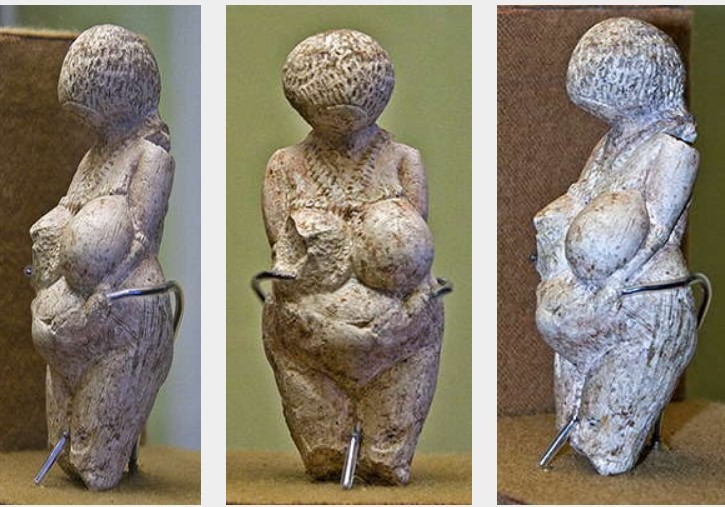
More have also been found in another Russian dig at Avdeevo. They lack feet and arms, as do so many others, and show a range of different body sizes.
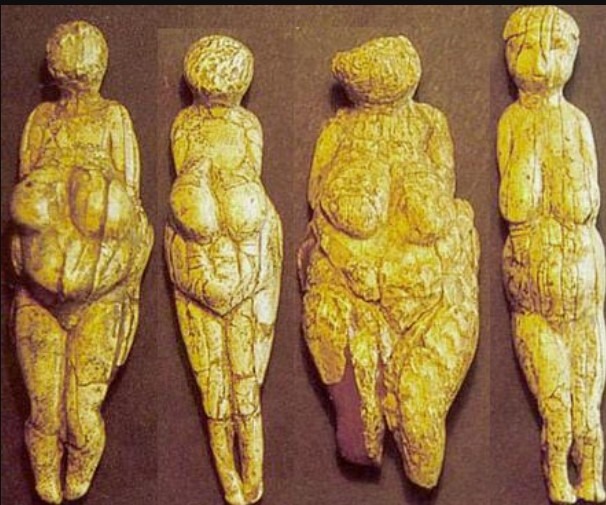
Avdeevo is also the home of the Double Venus. I think it looks more like a man standing behind a woman but different people have different ideas, especially when it comes to the paleolithic. Both Kostienki and Avdeevo sites have been dated to around 20,000 years ago.
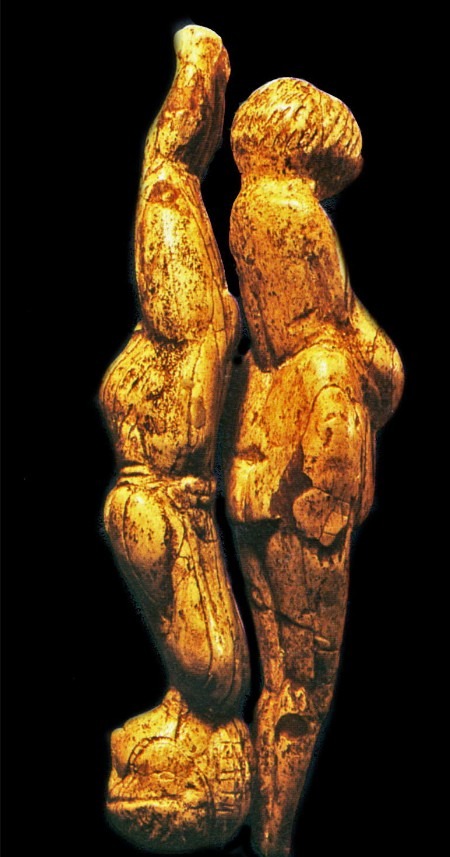
Another Double Venus was found in the Grimaldi Caves in Liguria, Italy, alongside singular statuettes collectively known as the Venus figurines of Balzi Rossi. A full list of images can be found here.
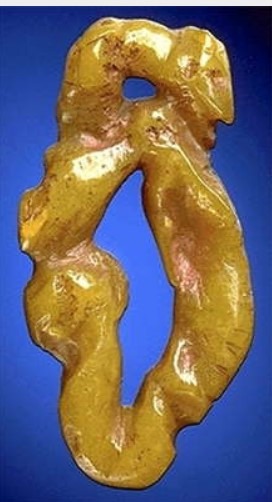
There are multiple options when it comes to what all these plus-size women represent. They may be a deliberate portrayal of fertility, aesthetic preference for flesh, availability of food and/or lack of hunger.
Maybe a fleshy female was a status symbol.
Feels strange doesn’t it?
21st century media continues to equate body size with success. With regard to feminine appearance, thinness remains the dream. Visual images staring at us from adverts, cinema screens or social media are powerful forces, ones we absorb it long before we learn to think or question from any critical perspective.

It can feel strange to see these explicitly larger women when you’ve been bought up surrounded by images from diet control industries. Despite the Body Positive movement, we’re still socialised to be negative about excess weight.
As a result, there’s something both liberating and shocking to see these paleolithic figurines flaunting their fat.
The statuettes suggest plus-size women were considered positive rather than negative. Representational art has traditionally been an act of devotion or admiration. There’s also the possibility gender difference simply wasn’t a big deal back then.
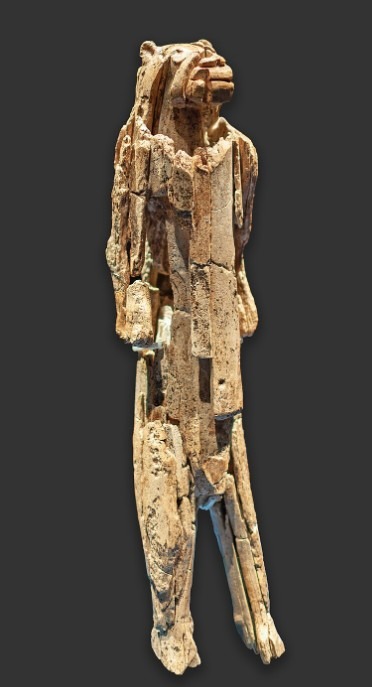
Although this post is about women, it’s worth mentioning male statuettes have also been found. The Lion-man of Hohlenstein-Stadel, discovered in the Hohlenstein-Stadel cave in Germany, is made from mammoth ivory and dated between 35-41,000 years ago.
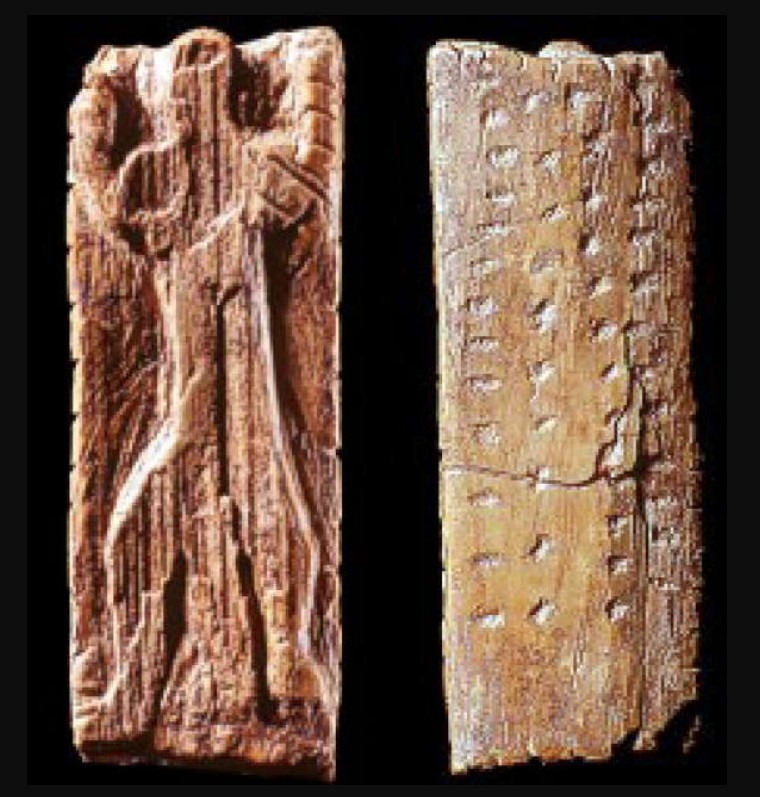
Another ivory male was found at Geissenklösterle. Dated @42-40,000 years BC and eroded by time, a figure with raised arms can be seen on one side, with a pattern of dots incised on the reverse. Although his arms could represent many things, their position has been interpreted as worship and it’s consequently been called the Adorant.
Other male statues include the Broddenbjerg Idol from Denmark which has a clearly defined and extended erection. Dated to 535–520 BC, it is outside the Paleolithic era but that doesn’t mean there might not be more older male figures waiting to be found.
Most intriguingly, figures have been found with removable genitals. These are fascinating because no one knows why. They include the Ralaghan Idol from Ireland @1096–906 BC, and the Dagenham Idol @2250 BC. Both have clearly defined holes in the genital area.
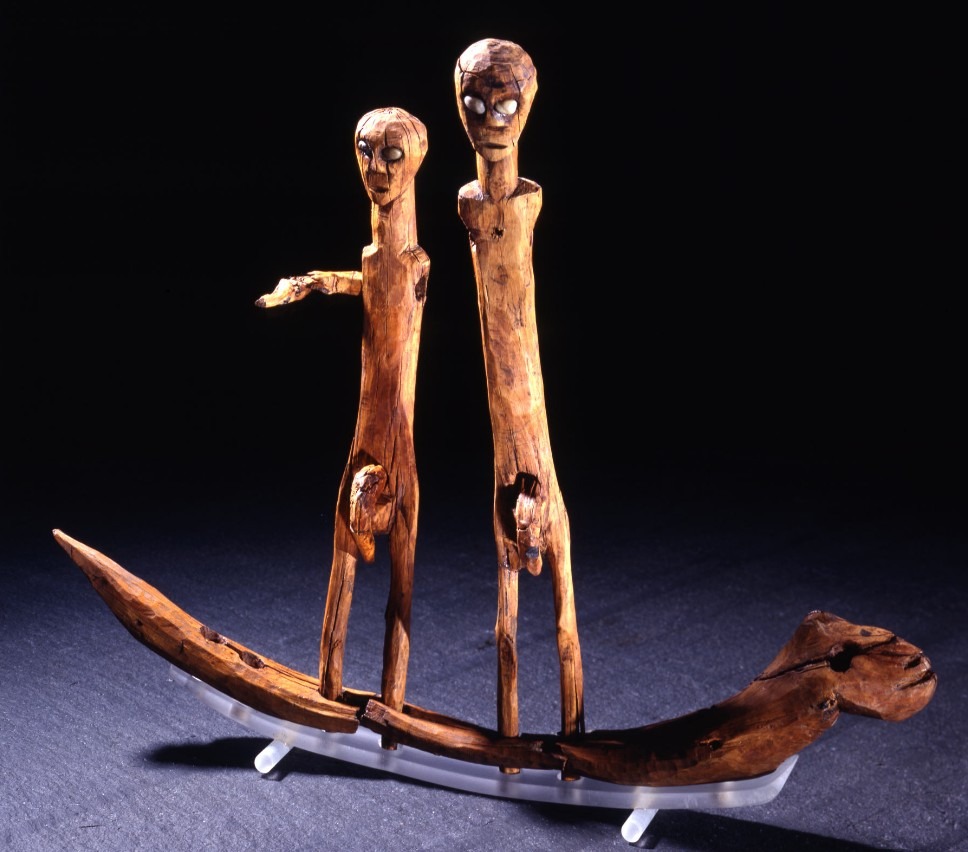
The Roos Carr figures were found in the 19th century in East Yorkshire. Carved from yew wood with quartzite eyes, and accompanied by boats, they’ve been dated to 606–509 BC.
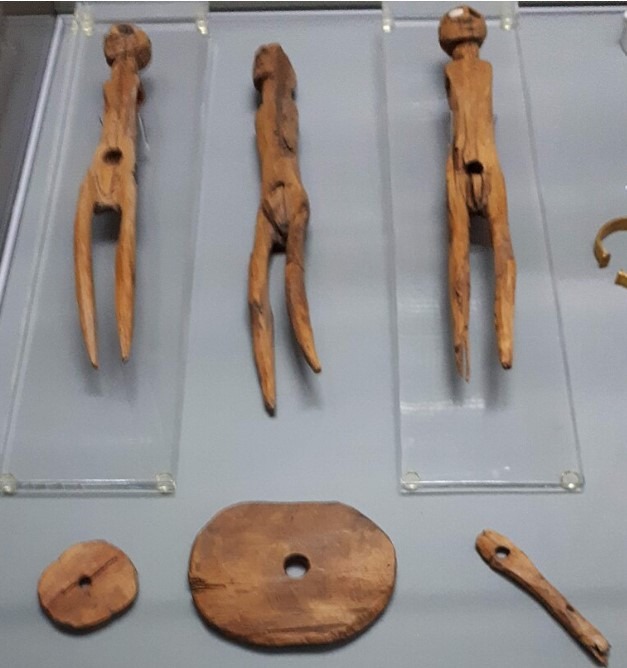
The figures have genital holes and separate penises. Stories include how one of the finders took a figure home as a toy for his daughter to play with and there were attempts to make one of the removable penises a short arm, allegedly due to Victorian sensitivities about sex!
Questions of androgyny and sexual ambiguity have taken us out of the paleolithic but it’s clear that either 40,000 or 3,500 years ago, sexuality mattered.
Looking for clues, I found an interesting link between the paleolithic and early greek culture.
Some statuettes, such as the Venus of Pekarna dated @12,500 BC (left) from Moravia in the Czech Republic, and the Venus of Oelknitz dated @14,000 BC, from Germany (right) follow a different design with greater emphasis on the buttocks.
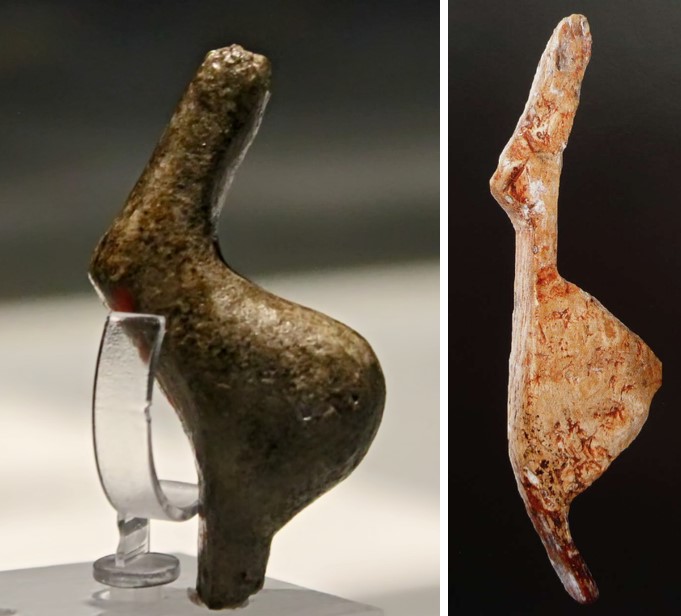
Several of these figures, thought to be @11,500-15,000 years old and made from ivory, antler, or bone, have also found in Gonnersdorf in Germany.
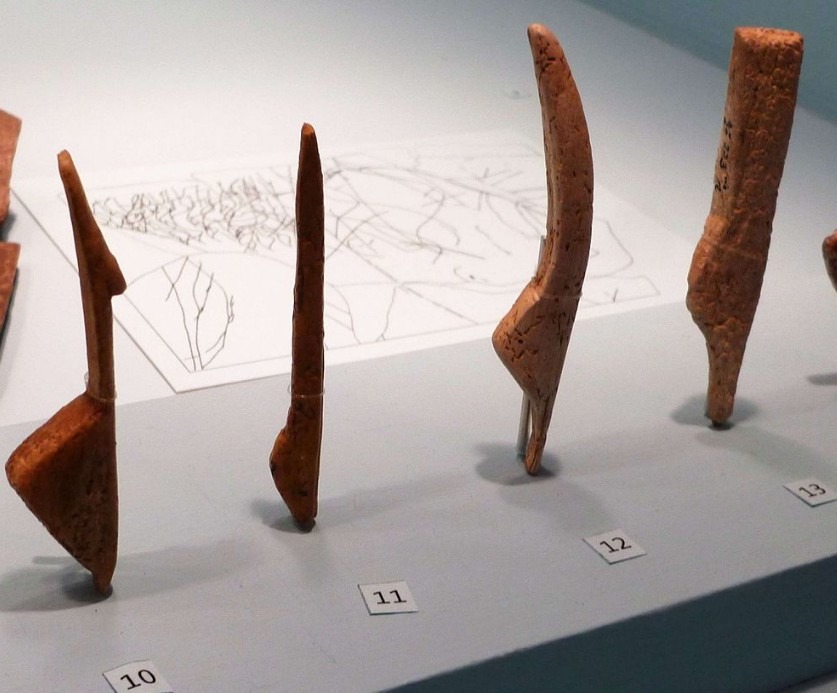
The ancient greek goddess Aphrodite was also known as Aphrodite of the beautiful buttocks. This reference, in Hesiod’s Theogony, hasn’t come from nowhere. It suggests a link with a pre-existing preference, possibly the same one represented by the Gonnersdorf statuettes.
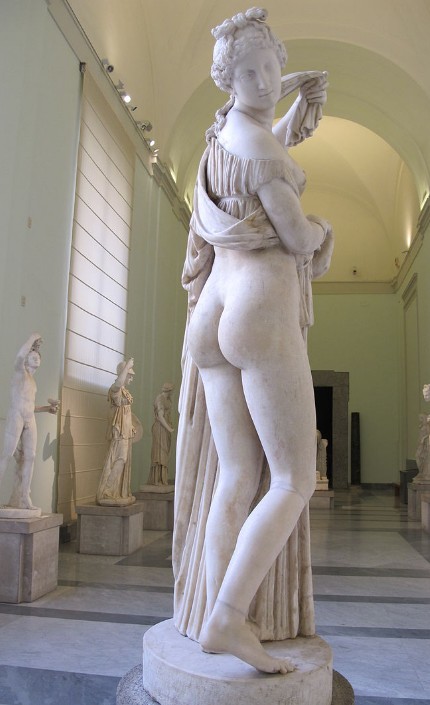
Here the trail goes cold. There is so much we don’t know although with regard to bottoms, there may be some contemporary relevance as buttock enhancement is one of many cosmetic surgeries currently available to change a woman’s size or shape.
This post has covered a lot of ground. We know paleolithic statuettes of women don’t exist in isolation. There are male figures, albeit often a touch sexually ambiguous, and those with interchangeable genitals, who seem capable of being both male or female, depending on the situation.
Absence of knowlege provides opportunities for speculation and writers and poets often operate in these spaces. The next post will talk about cave paintings from the paleolothic and continue this exploration of how sex and gender may have once been very different to how we interpret it today.
For further information, see the resources at Don’s Maps and the Peter Bradshaw Foundation. If you know of any other sites dealing with the paleolithic era, in particular representations of gender and lifestyle, please let me know in the comments below.