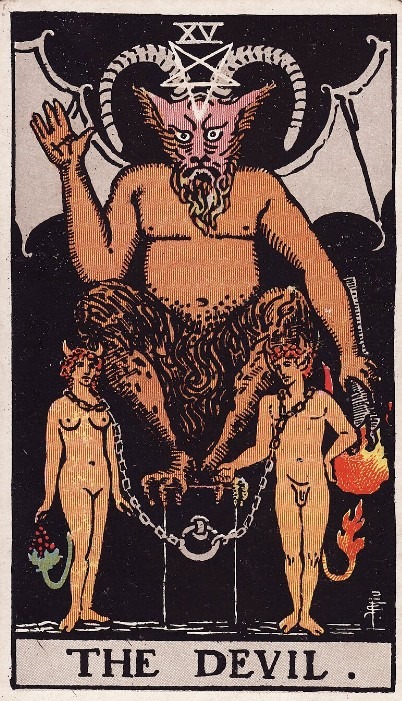
The devil begins the third and final line of cards. The fool has journeyed through the conscious and unconscious layers of his personality and now needs to face his subconscious, the most hidden layer of his psyche.
There are 7 cards left.
It’s time to delve deeper.

The devil archetype appears across cultures and belief systems, both religious and occult.
Christianity is responsible for creating the image of a devil. The book of Revelation tells the story of the archangel Michael fighting the devil in the form of a dragon;
And the great dragon was cast out, that old serpent, called the Devil, and Satan, who deceiveth the whole world: he was cast out upon the earth, and his angels were cast out with him. (12:9)
Although not named as such, the serpent who tempted Eve in the Garden of Eden is commonly thought to be a representation of the devil so snakes and dragons became synonymous with evil.

The earliest tarot decks from the 15th century such as the Charles VI and Visconti Modrone don’t include a devil, although recent publishers have tried to reproduce them.
The Visconti Sforza pack now includes a devil in human form with wings, horns and a pitchfork but this is a contemporary design and not from the original pack.

The devil card has undergone a series of changes over the years.
The Budapest and the Rosenwald tarots from the late 1400’s both show a devil image with horns, clawed feet and pitchfork.
Many early tarots, such as the Rothschild and 16th century Agnolo Hebreo decks included an additional face on the figure’s abdomen.

Some say this represents egotistic greed and cite Romans 16:18 (NIV) and Philippians 3:19 (NIV) where serving yourself rather than god was considered the ultimate in selfish behaviour.
The Mitelli tarot from the mid-17thcentury includes the flames of hell, with the devil in control of a serpent under his feet.

Snakes also appear in the Minchiate and the Dellarocca tarots. The devil began to appear more goatlike than human. In the early Rothschild tarot and 16th century Agnolo Hebreo tarots the devil’s legs were animal shaped.
The devil was a widespread component of the 17th century witch hunts where women were accused of making pacts with the devil in return for his support. The osculum infame or profane kiss came from this period.
As the tarot travelled to France in the 18th century the devil was shown with hermaphrodite features with bat wings and antlers.

The pitchfork transformed into a torch, with some Marseilles-style packs showing rabbit ears along the way. The French decks also introduced two additional tailed figures, often both female, and appearing to be in chains.
As with many other cards in the major arcana, it was the adoption of tarot by the French occultists in the 19th century which led to the image of the devil most commonly seen today.
Eliphas Levi was the first to link the devil to Baphomet, a half-goat/satyr, half-man creature.
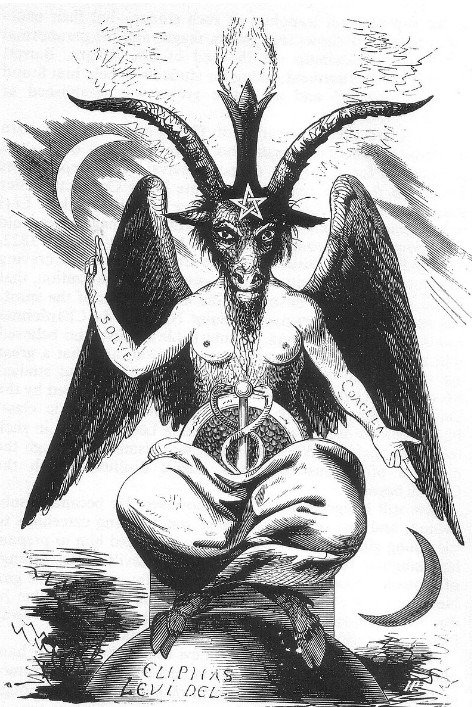
Levi’s image of the devil has arms pointing up and down like the magician, suggesting as above, so below, but this is a parody from a more devilish perspective.
This devil looks more like a goat with longer horns, cloven hooves and a goatish face.
The wings return to a more angelic style but are black, suggesting the dark or fallen angels.

Oswald Wirth, influenced by Levi, Eittella and the occultists before him, changed the people to red and green demons chained to a pedestal on which the devil stood with a torch in each hand. The card represented universal energy and showed an unequal balance between the forces of material and immaterial consciousness.
We’re getting closer to the idea of the devil representing the ego’s addiction to instant gratification and the domination of lust and greed.
The Waite/Coleman Smith devil retains the look of Baphomet but Waite denied historical connections between the devil and the witch’s sabbat, horned god or as a deity for black magic and satanism. He claimed the devil guarded the gateway to true knowledge of spiritual development.

The fool sees a scary image. Like the death card, he’s been influenced by his upbringing and feels a stab of fear.
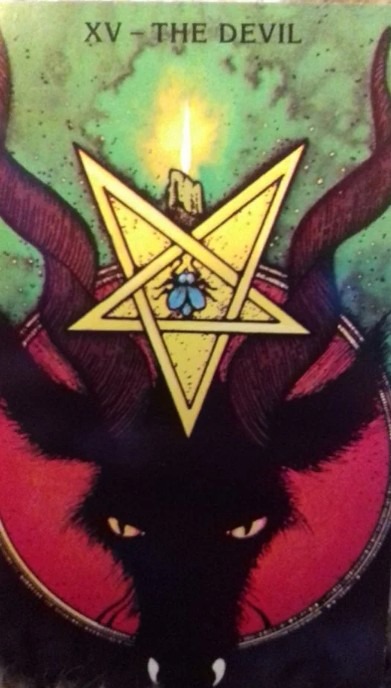
The devil in front of him has the wings of a bat and claws for feet, with a reverse pentacle between his horns, representing materialism over the non-material.
The two people now resemble Adam and Eve in the lovers card. They appear chained to the pillar but the chains hang loosely around their necks, reminding the fool this is the card of illusion as well as desire.

devil from the golden Dawn tarotThey could walk away but have chosen to remain trapped.
Their goat horns and tails indicate the inner animal natures which lead to acceptance of temptation. The fool sees how the woman’s tail ends with fruit from the tree of knowledge while the man’s tail looks like the flames on the tree of life.
Flames are associated with passion.
Sex is an energy.
It can feel overwhelming and all consuming, but is another illusion because initial excitement is rarely permanent.

Similarities with the magician have been retained, but whereas the magician’s wand drew power from above, making him a conduit through which life energy flowed and became grounded, the devil’s torch points to the earth.
There’s nowhere for the energy to flow.
It’s trapped within the material, physical world.
This concept is reinforced with the glyph for planet saturn on the devil’s palm which represents the boundaries of time, over which the fool knows he has little control.
He can choose what he does in the moment but has no control over the actions of others, or the point at which his time will come to an end.
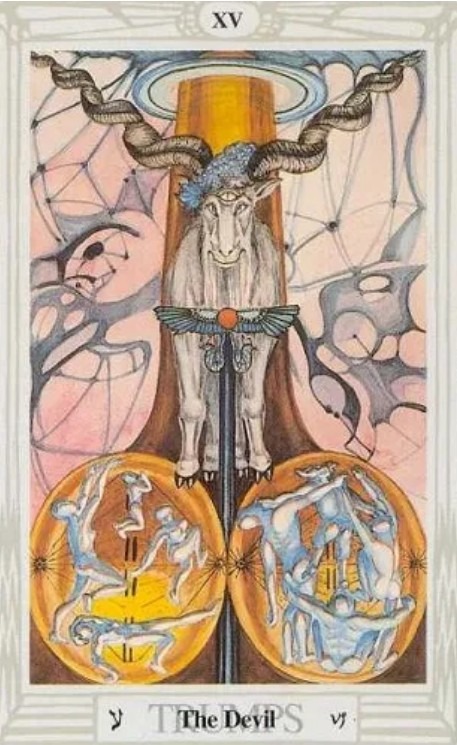
The outstretched fingers of the devil’s right hand form a V shape. Some say this comes from the Jewish priest or Kohan‘s blessing which forms the the hebrew letter shin for El Shaddai, the almighty (god) or divine power. All priests are mediators between above and below, like the magician.
The western church required its priests to be celibate, their sexual energy reserved for channelling it toward god. In eastern traditions, sex and spirit have been combined in tantric sex practice where desire can be harnessed and directed toward more spiritual forms of energy.
The difference between the two approaches is extreme. The devil stands between them as the card of desire, with the fool being face with a choice.

In ancient Hebrew, saturn’s angel is Cassiel, a name some use for the temperance angel in card 14. The fool liked temperance and the idea of balance between his inner and outer worlds, but now h’s learning the ever-present devil still has the power to disrupt this harmony.
The devil card deals with the energy of life. This can be manipulated and transformed, often releasing what’s been repressed, but the outcome is dependent on individual will.
We all have deeper, murkier sides and through the devil archetype, the transformation to pleasure can take a darker turn, as in addiction, self-harm or violence towards others.

To feel desire is to witness control by the ego. The fool has been learning about the ways the ego has influenced his conscious world and now realises quashing the ego in the death card was not enough. It’s time for him to come face-to-face with the ego’s world of temptation.
The devil card explains the negative side of attraction and how sometimes he wants the very things which cause harm.
The roots of this paradox often lie in upbringing and the influences of early life. Psychologists have long recognised people choose partners who remind them of their parents, even when their home life was dysfunctional.

The fool learned to take comfort from what felt familiar without consideration of the potential for abuse. In the devil card, the man and woman are depicted as slaves to their desires. Greed, lust, and perversion can be individual choices or be actively encouraged by those already enslaved by avarice. The devil represents both victim and perpetrator.
We make excuses for bad behaviour. Envy those who appear to have what we want. To be different from the crowd can become ‘demonised’ while the devil made me do it is a phrase often used to avoid accountability.

Not only can desire compel us to harm ourselves, some derive pleasure from causing harm to others. You can want to be loved or accepted so much, you’ll do anything, even when it’s fundamentally inhuman or destructive.
Others want to be unique. They construct identities through traits and attitudes considered negative and antithetical. Like attracts like, regardless of nature. There is power in numbers and the devil is the card of social unrest and disorder.
What lessons does this card have for the fool?

We all have a shadow side which contains repressed or rejected emotion. We store these in the deepest part of our psyche and try to forget their origins.
Repression of trauma can result in surface behaviours often negative to health. We might not understand or be able to explain the rationale, but continue to follow unhealthy lifestyles.
Activities can appear irrational and destructive but are maintained because they give relief, albeit temporarily.

Many people find ways to live without addressing the source of addictions or poor mental health, while others seek help. This will involve attempts to uncover the roots of negative behaviours by delving into the subconscious.
The fool might feel he has little choice over the darker aspects of his life, but card 15 shows the chains are not permanent. To know and understand the vagaries of the ego and its manipulative drivers of action, will help free the fool from its influence.
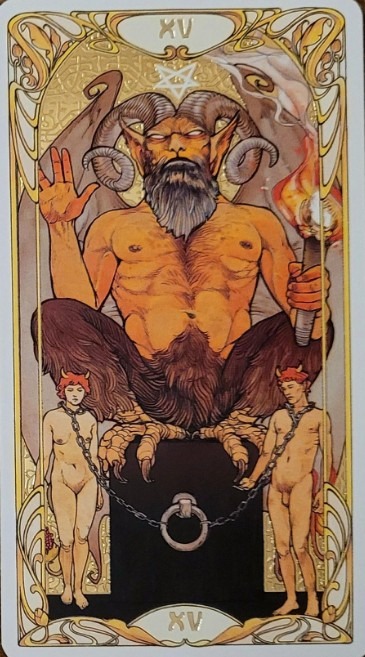
The devil might be seen as the source of temptation, but ultimately the power to break addiction, and other unhealthy coping behaviours, remains down to individual choice and willpower.
From this point on, the fool knows any devilish driven desire inside him represents illusion.
The chains are not binding.
We all have a shadow side which contains repressed or rejected emotion. We store these in the deepest part of our psyche and try to forget their origins.
Repression of trauma can result in surface behaviours often negative to health.
We might not understand or be able to explain the rationale, but continue to follow unhealthy lifestyles.
Activities can appear irrational and destructive but are mantained because they give relief, albeit temporarily.
Many people find ways to live without addressing the source of addictions or poor mental health, while others seek help. This will involve attempts to uncover the roots of negative behaviours by delving into the subconscious.

The fool might feel he has little choice over the darker aspects of his life, but card 15 shows the chains are not permanent. To know and understand the vagaries of the ego and its manipulative drivers of action, will help free the fool from its influence.
The devil might be seen as the source of temptation, but untimately the power to break addiction, and other unhealthy coping behaviours, remains down to individual choice and willpower.
There are ways to release the chains.

It won’t be easy but can be done.
From this point on, the fool knows the devil inside him represents illusion.
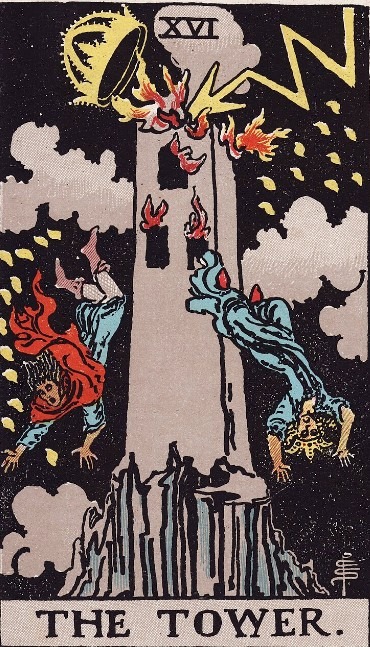
The next card the fool will meet on his walk through the tarot is the tower struck by lightening, the card of upheaval and potential destruction. Coming straight after the devil, what will the fool make of this?
Join us for the next step of his journey.
images my own, or copyright free from wikipedia commons and https://pixabay.com/