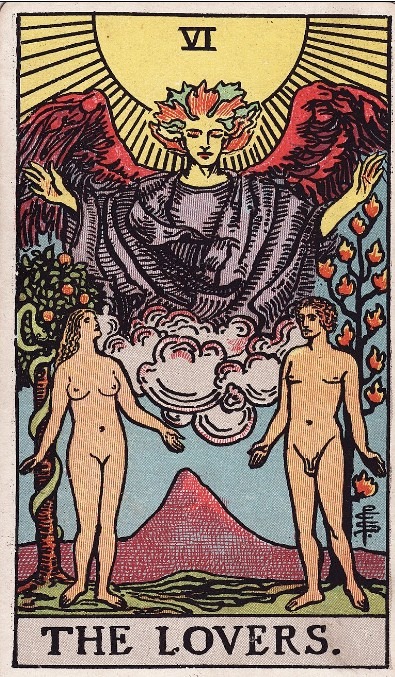
The fool has arrived at card 6, the lovers. He’s met the magician and high priestess, the empress, emperor and hierophant. They were all individual archetypes but the lovers card appears more surreal with less potential for personal interaction.
The fool isn’t too sure what to take from this.
In the Waite/Coleman Smith image, the card looks like the story of Adam and Eve, suggesting the biblical act of creation, mirrored in myth around the world, and source of original sin.
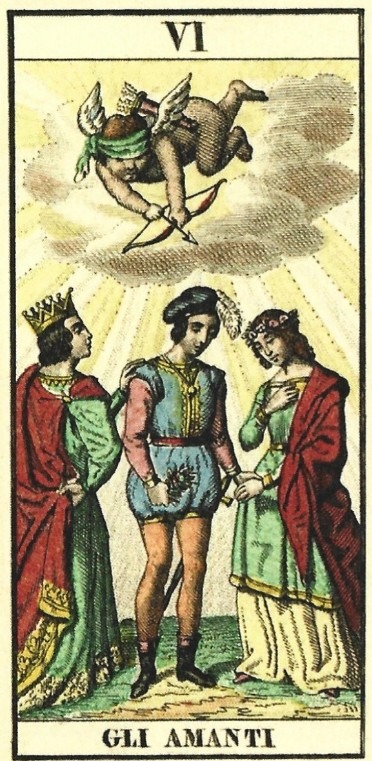
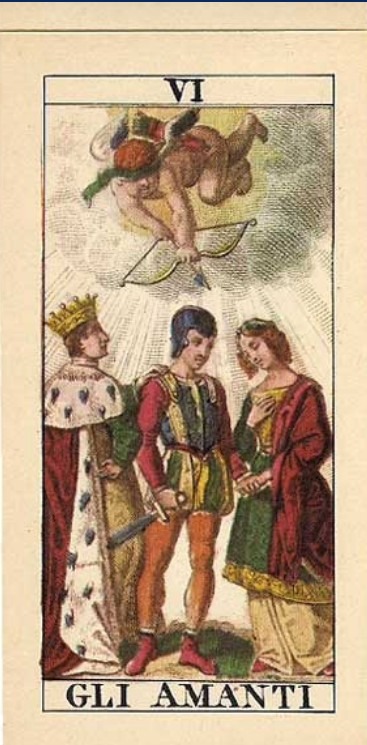
However, early tarots showed a typical marriage between the noble families and dukedoms of 15th century Italy.
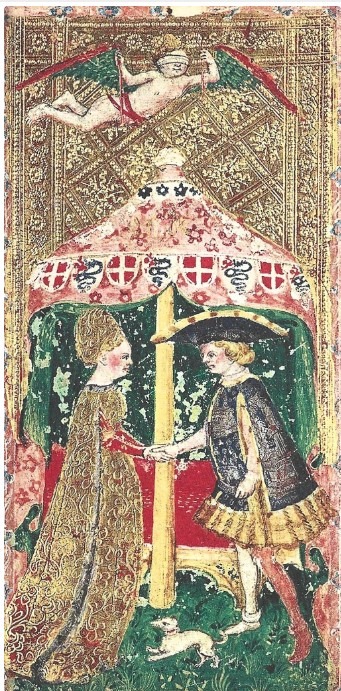
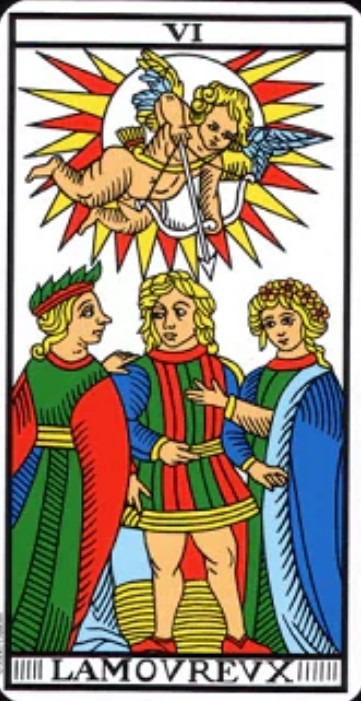
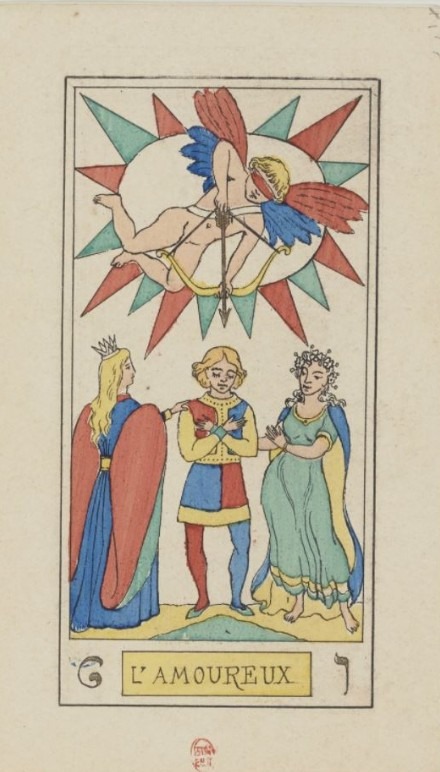
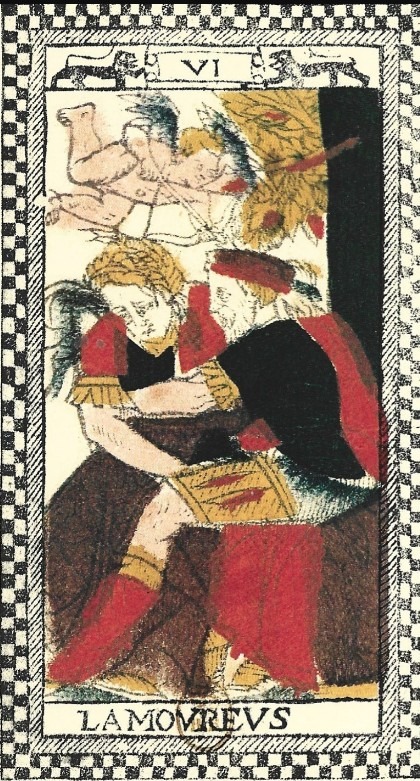
The Visconti Sforza/Modrone cards have a cupid figure floating above the couple, while the Charles VI deck has 3 couples and two cupids.
Where power, wealth and land were involved, marriage was often a business transaction with romance limited to the pages of books or songs.
The idea of courtly love, lost love or fatal love were themes embedded in stories which have come down to us today as Tristan and Isolde, Romeo and Juliet, Hero and Leander and the Arthurian legends.
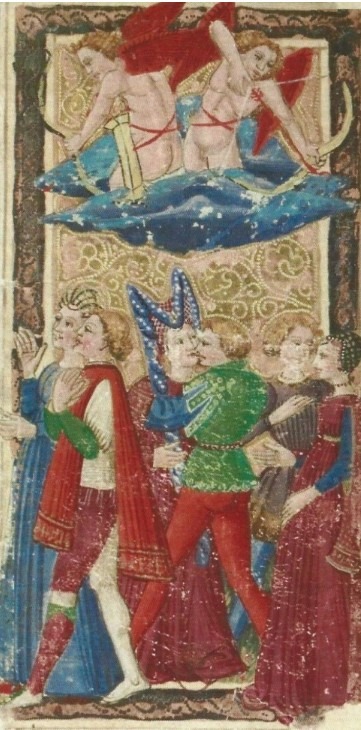
The card was originally called love but this referred to the concept or idea of love, rather than any specific relationship.
The association between love and cupid’s arrows was a common trope.
His arrows were either gold or lead tipped, one for passion and one for indifference, even hatred. This gave Cupid, son of Aphrodite and Ares, a darker side. To be expected with his mother representing lust as well as love, and his father the god of war and battle grounds.
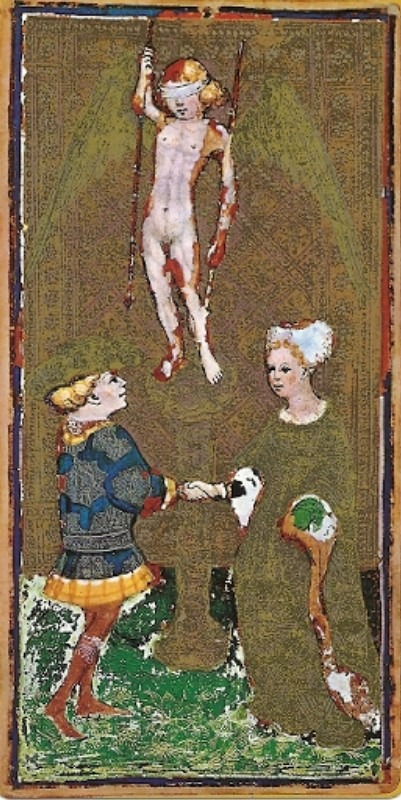
In 15th century, cupid was less a cherub for romance and more random.
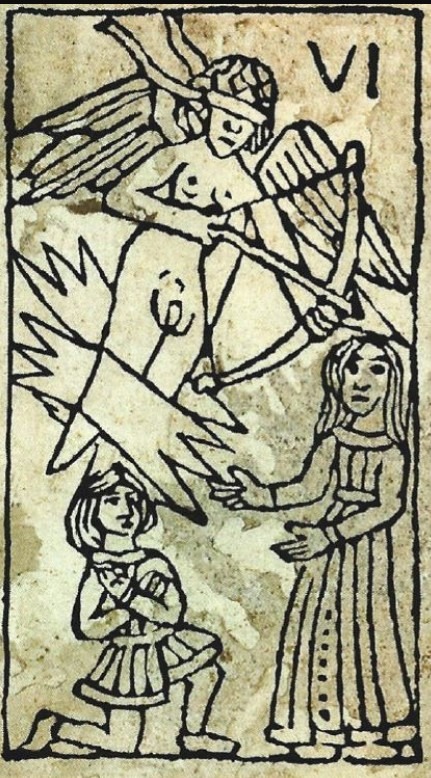
Cupid was often shown with his eyes covered.
Not only was love said to be blind, the idea of cupid not knowing where his arrow would land reinforced the unpredictability of attraction.
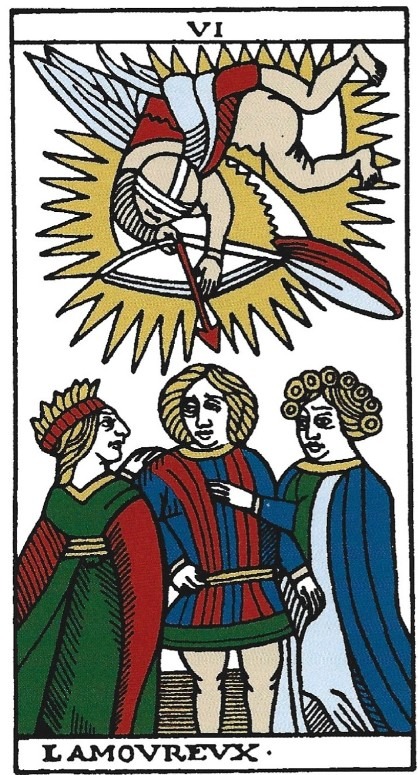
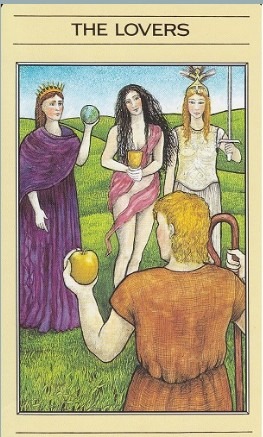
Over the years the card has shown both a couple and a man with two women, apparently unable to choose between them.
Choice lies at the heart of this card’s meaning.
Not only does it represent the different aspects of attraction and desire, it also refers to being torn between two alternatives, which need not be romantic but can be life-changing.
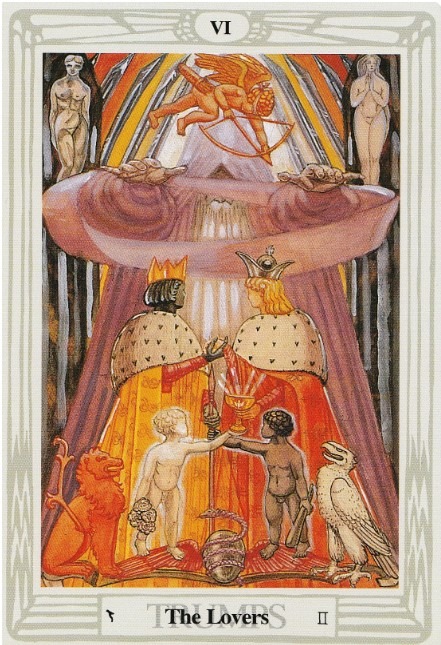
The myth of Hercules at the crossroads shows the hero being forced to choose between a life of virtue or of vice. This idea of life changing decisions was utilised by the occultists who adopted tarot in the 19th century. The Golden Dawn lovers shows the myth of Andromeda being rescued by Perseus.
The card name also changed from love, to lover to lovers during this time.
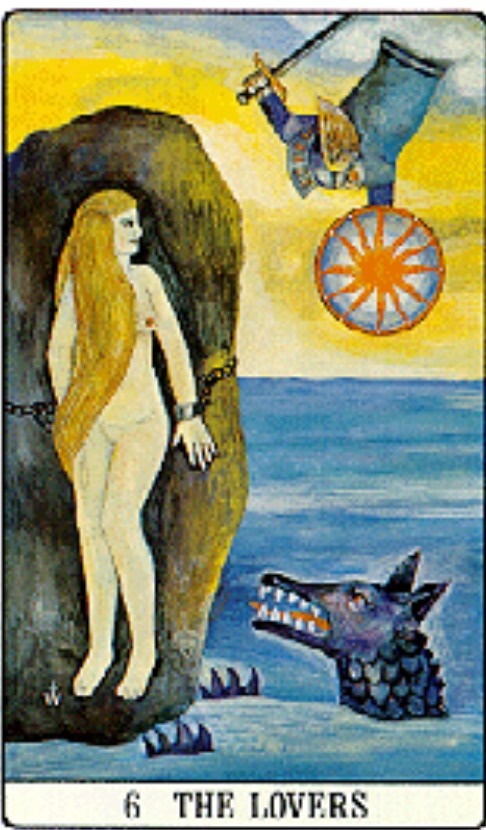
The fool has met the magician and high priestess who’ve shown him the dual nature of his humanity. He can choose a conscious life of material pleasure or decide to explore the unconscious layers of the self.
Like Hercules, there’s a choice between the physicality of pleasure or a spiritual morality. Ideally, the fool will find a balance which incorporates the best of both.
At the start of the 19th century, Waite/Coleman Smith made some significant changes to the lovers card.
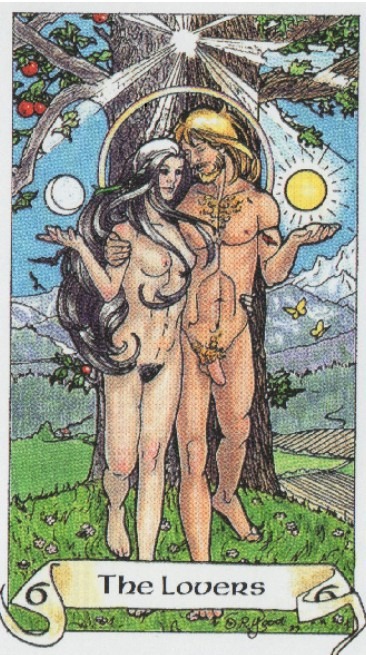
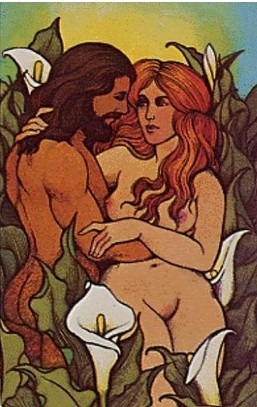
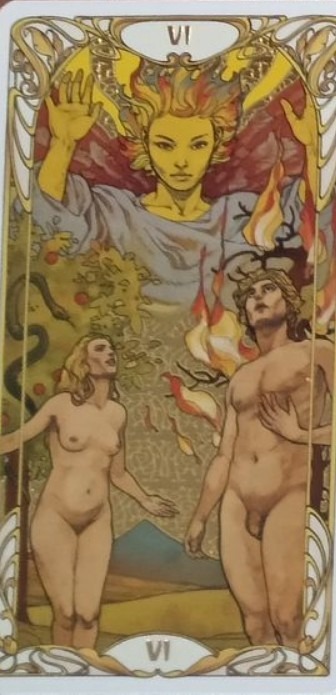
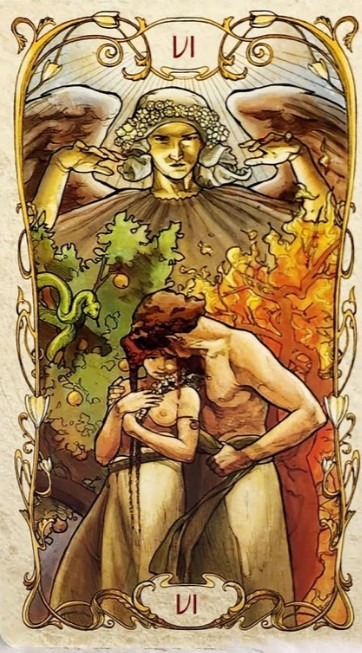
Today, the fool sees a naked man and woman standing between two trees. Associations with Adam and Eve are unavoidable. Behind the Eve is the tree of knowledge with its mysterious fruit and coiled serpent.
Adam stands in front of the tree of life, which represents eternity. The tree appears to sprout flames as leaves. There are 12 of them leading to suggestions they represent the zodiac, while others see them as flames of passion and transformative energy.
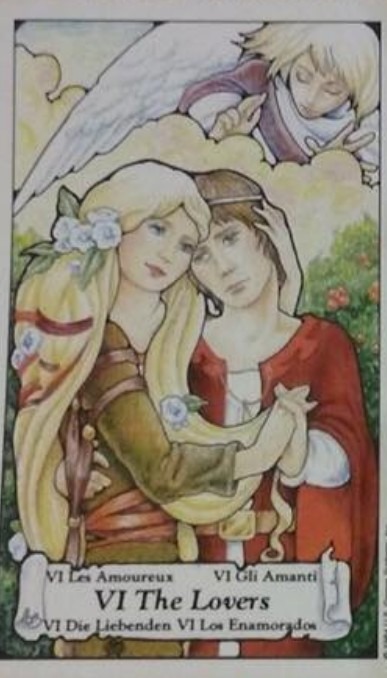
At the top of the card is a supernatural being with large wings, purple robes flaming sword and fiery hair. It appears to be wearing the sun.
Some say it represents the cherubim with a flaming sword sent to guard the gates of Eden after Adam and Eve were banished, while others suggest this is Raphael, angel of healing, love, and relationships, representing the power and energy of emotional attraction.
A.E. Waite, in his Pictorial Key to the Tarot, calls the image a figure so maybe, rather than a literal angel, it can be seen as a symbol for the mysterious force that joins people together in ways they don’t quite understand or have little control over.
Love comes and goes.
Everyone feels and experiences love differently.
The Waite/Coleman Smith lovers retains the idea of choice. In the face of temptation, Adam and Eve had the option of whether or not to eat the fruit. Decisions can maintain the status quo or lead to change, often with a very different set of consequences.
The fool has been travelling along the first line of seven cards from the tarot’s major arcana. The magician has showed him the power of creative energy cannot be released without making a deliberate choice.
The fool chose to leave home and so far, had chosen to travel from one card to the next. He’s beginning to understand how the external world around him is constructed but so far he has travelled alone.
Who and what we choose to love has consequences. In the context of the tarot, an early experience of love can involve an act of separation from family and home, both emotionally and physically.
First love is often the first step towards an independent life.
Whereas the previous cards have shown the fool ‘what is‘, the primary significance of the lovers is ‘what might be‘.
The early years of life are mostly spent understanding how the surrounding world is constructed.
The experience will always be unique but rests on the universal truths upon which tarot is built.
The lovers represents the first steps beyond the influence of parental and familial control.
The fool likes the idea of one day settling down with marriage and children. Like most of us, he’s been swayed by notions of romance and happy ever after. At the moment though, all that is far from his mind.
One of the meanings of the fool’s zero is innocence, verging on naivety.
He has not yet learned how love comes in many ways, sometimes unlooked for. The fool doesn’t yet know its power.
He loves his parents and siblings, but so far his heart has remained unbroken.
Tempted by fruit from the tree of knowledge, Eve made the decision to disobey god which led to banishment from the garden of eden. An early example of consequences.
The lovers card is about the consequences of falling in love. The fool knows the socially constructed images of moonlight and roses. How some marriages thrive and survive while others falter.
He’s also seen how love can also trigger jealousy and resentment, leading to hatred and violence.
These are all part and parcel of the binary package of this card.
Traditional sayings associated with love, such as love is blind, often involve verbs like falling:
- falling head over heels in love
- falling in love is like coming home
- you can’t fight falling in love
Love is universal. Writers describe it as a sensation of being out of control.
In the Iliad, Homer says …there is the heat of Love, the pulsing rush of Longing, the lover’s whisper, irresistible—magic to make the sanest man go mad (Iliad, Book 14, lines 259-261) while Shakespeare cautioned The course of true love never did run smooth (Midsummer Nights Dream, Act 1, scene 1, line 136).
There’s not much chance the fool will never experience passion and love, but what he does with these emotions will be a mystery until it happens.
He is learning how at some point in his life, love will change what he does and how he views the world. He will have the choice to stay or walk away.
The card represents an achetype of love. As such the fool can’t interogate it to ask questions. There’s no opportunity to receive advice.
Love can come from nowhere and feel beyond our control, hence the randomness of cupid’s arrows.
Love cannot be known until it happens.
Love is unpredictable.
One half of a pair might change and walk away, so there’s the grief associated with loss of the one who was loved…
The card represents an archetype of love. As such the fool can’t interrogate it to ask questions. There’s no opportunity to receive advice. He has to work this out for himself.
Of all the human emotions, love is the most complex but it’s not only about other people.
The fool has to learn to love himself.
Depending on upbringing, this can come naturally or be a challenge.
The fortunate child is bought up with people who adore them, where the experience of unconditional love creates an inner confidence.
The unloved child will be confused by their emotions.
As adults, they might not recognise healthy love and find it hard to tell the difference from obsession or co-dependency.
The fool needs to learn to love himself before he can authentically love another.
To retain a sense of himself, rather than depending on someone else to feel complete. To make the mistake of finding yourself through another is to risk being left with nothing if the relationship breaks up.
Knowing and loving yourself is key to survival.
It’s a hard lesson, but will be reiterated as the fool continues his journey, in particular when he steps on the second line of major arcana cards, which represents the unconscious, just one more card from now.
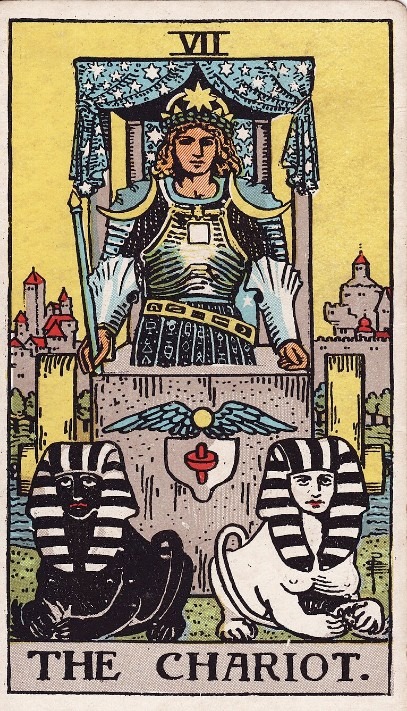
The next card on the fool’s journey is number 7 the chariot which represents self-control and overcoming obstacles through individual will power and determination to succeed, but also the need for balance in order to achieve this.
Join us we take the next step on a walk through the tarot…
images my own, or copyright free from wikipedia commons and https://pixabay.com/