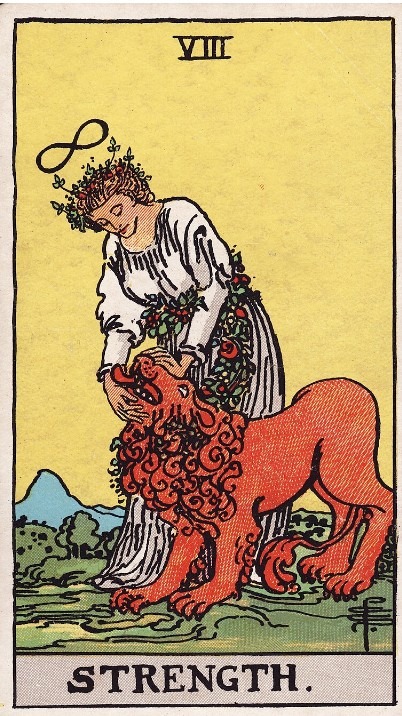
The fool has arrived at the card 8, strength. He’s beginning his journey through the second line of the tarot’s major arcana.
Having met archetypes from the world of consciousness; the magician, high priestess, empress, emperor, hierophant, lovers and chariot, the fool is about to explore unconscious layers of himself.

In the previous post, the fool met chariot which stood for status through achievement. The young driver’s ego appeared to have achieved outer success through the exercise of willpower, but there was a problem. The chariot was stuck because something was missing.
In order to progress, he needs to control that ego part of his consciousness which desires instant gratification in a material world.
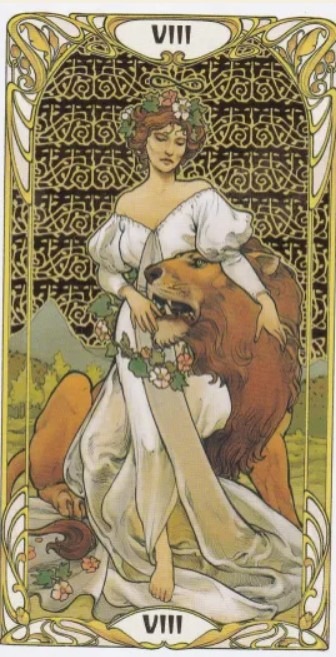
In card 8, the fool is being shown the answer. The integration between his outer and inner selves begins with strength but this is strength of a different kind.
It’s time to tame the lion.
Early tarot cards often incorporated familiar myth and scripture. Strength was one of the virtues, alongside justice (card 11) and temperance (card 14) while the lion has been a cultural representation of strength and power for centuries.
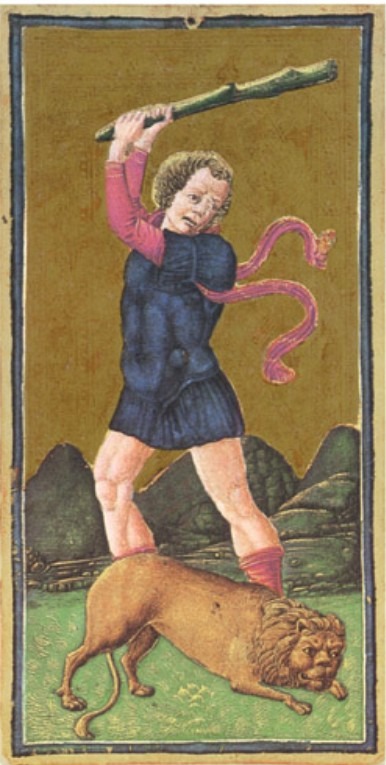
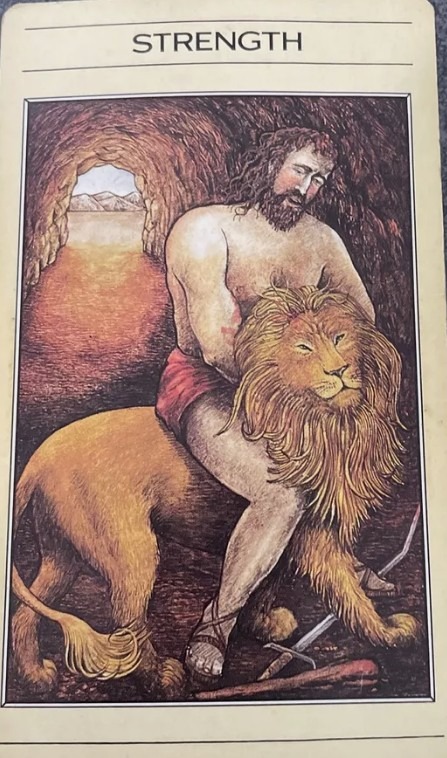
One of Hercules 12 tasks was to kill the Nemean Lion. Afterwards, the goddess Athena helped him make a cloak from the lion’s skin, a symbol of strength.
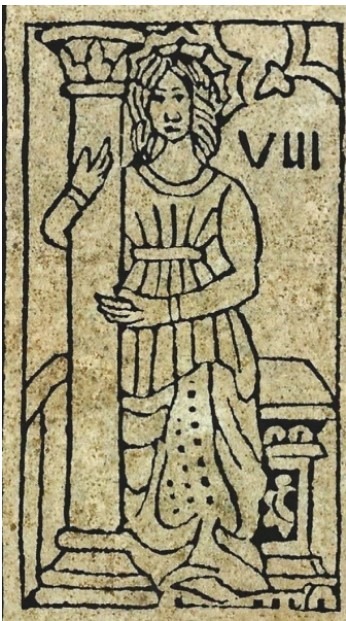
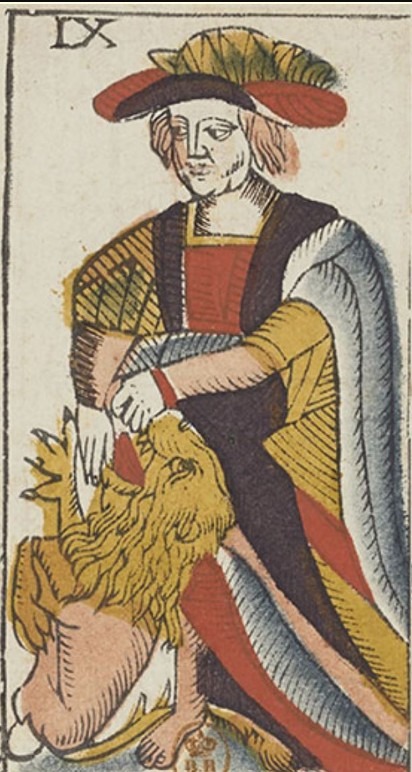
One of the earliest tarot decks, the Visconti Sforza (c1450) and the Budapest tarot from the late 15th century show a man fighting with a lion, while the Rosenwald tarot from a similar time shows a woman standing between two pillars.
This may be a reference to Samson who killed a lion with his bare hands as well as using his strength to pull down the pillars of the temple.
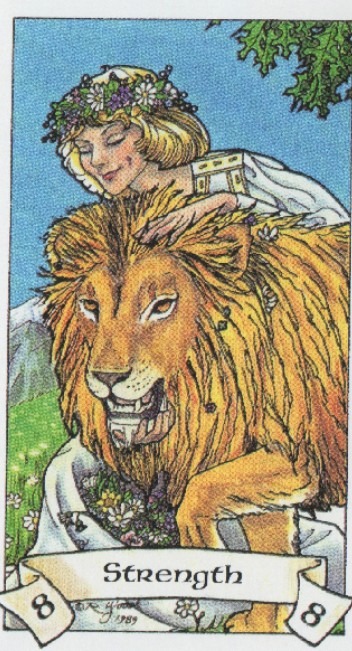
The image of a young woman taming a lion first appeared in the Visconti Modrone tarot (c1440).
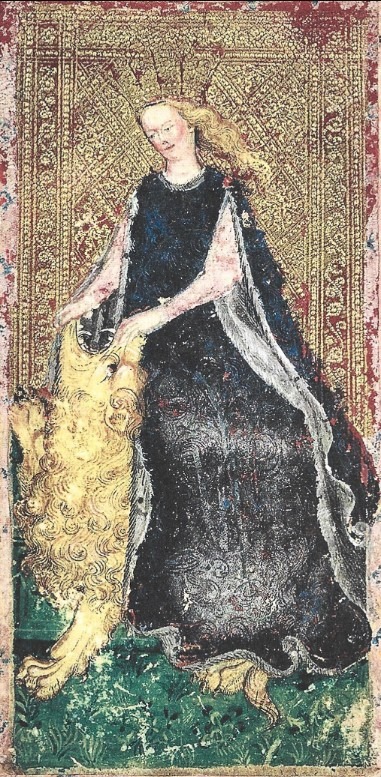
As the tarot moved from Italy to France, the idea of a woman overcoming the physical strength of the lion prevailed. In the Marseilles style decks, the woman often wears a hat with a wide floppy brim which appears to be a forerunner of the lemniscate.
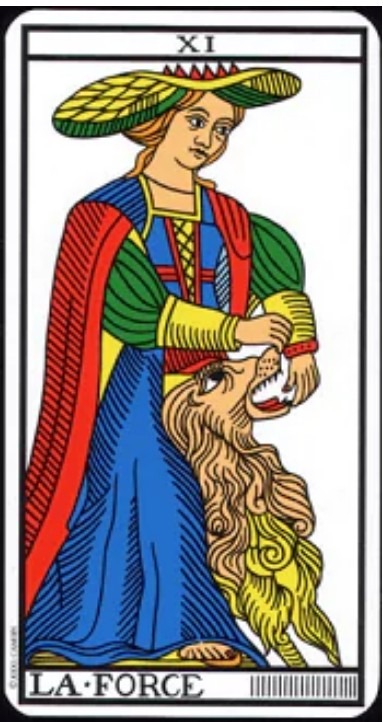
The French occultists, who adopted the tarot in 19th century, reinforced this symbolism and introduced a psychological interpretation whereby strength represented inner self control, in particular over the material, animalistic ego that seeks instant gratification.
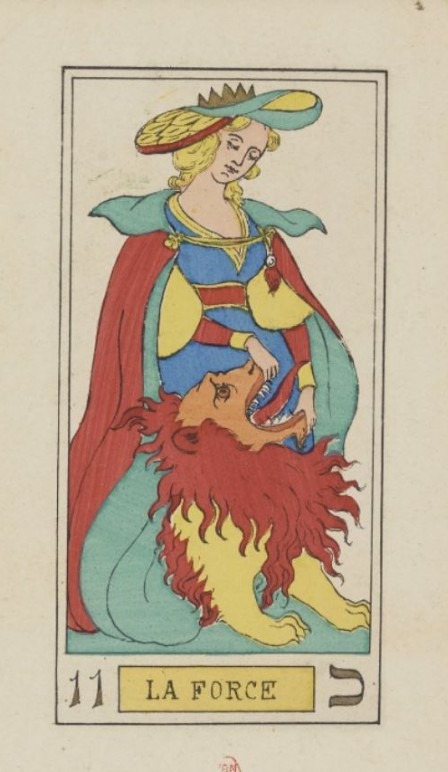
Esoterically, this involved a redirection of energy from feeding the ego to powering a greater inner awareness.
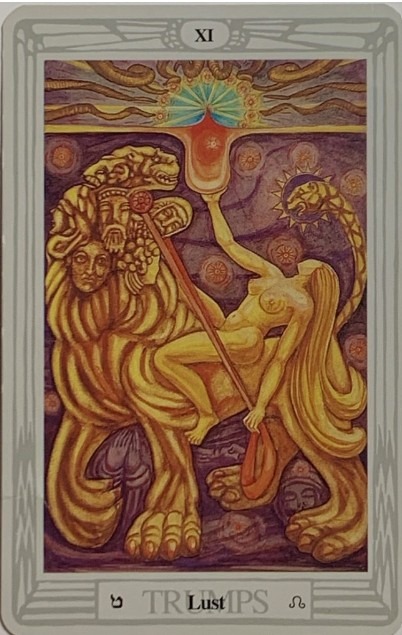
In Aleister Crowley‘s Thoth tarot strength has been renamed as lust, a direct reference to the physical energy of desire and pleasure.
We’re being shown a universal truth – real strength comes from the inside.
The Waite/Coleman Smith strength card shows a lion with his tail between his legs in a position of submission.
There are similarities with the Waite/Coleman Smith magician, the first card the fool met on line one. Both have the same colour background and infinity symbol while the garland worn by the woman around her waist and in her hair mirrors the flowers surrounding the magician.
Above her head, like the magician, there is the lemniscate, representing infinity and demonstrating inner control and will power being stronger than the king of beasts.
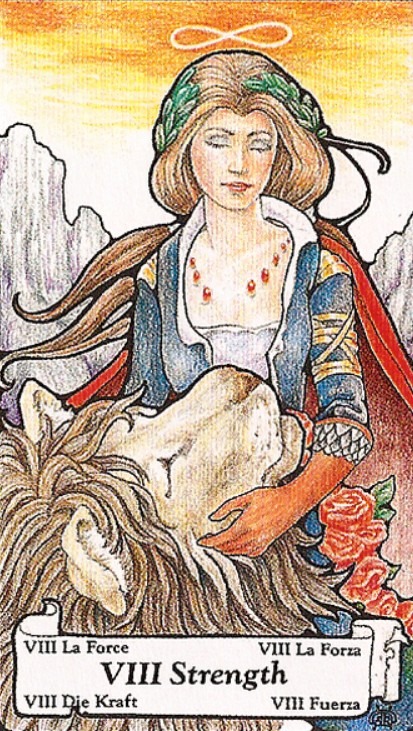
It’s worth mentioning how in earlier packs strength appeared as card 11 with justice as card 8. The Waite/Coleman Smith deck changed these round. Strength works better as card 8 because it represents the missing element from the previous chariot plus its position at the start of line 2 is apt.
We can’t progress without knowing ourselves and the inner unconscious forces which drive us.
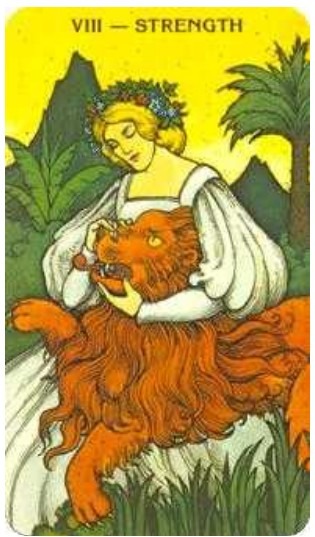
The lion represents wildness.
The untamed power of raw emotion and instinctual urges.
These can sometimes feel overpowering and lead to negative, unhealthy behaviours. They make us selfish and encourage us to put desire first.
There’s a need to recognise our wild side, especially when it causes negative effects.
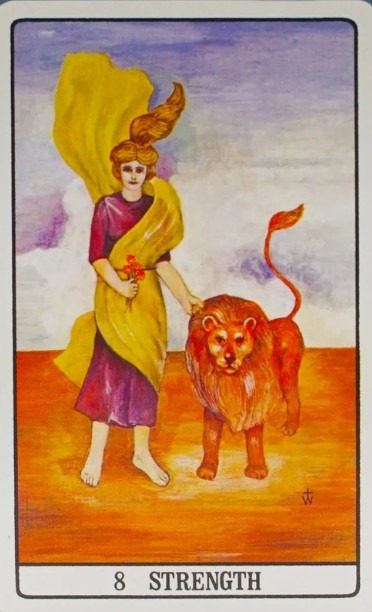
To identify the chains that bind us.
Learn to control our inner wildness and know when or when not action is appropriate.
To use strength to tame ourselves, while retaining the ability to be authentic and honest.
It’s time for the fool to pause and reflect. Do some self analysis. We all have different layers. The self we present to the external world can be different to how we feel inside. Some people don’t even realise they have an inner consciousness or how the unconscious mind is structured. Why would they without a trigger?
The role of the tarot is to make us think.
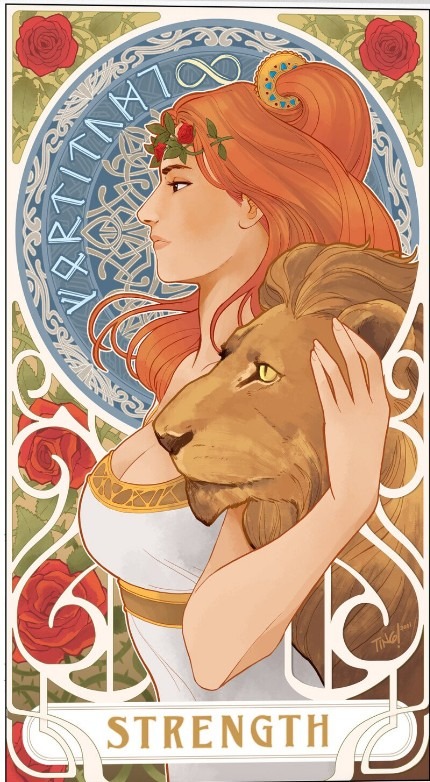
The fool left home because it felt the right thing to do. He wants new experiences. A small town has limited opportunities for a young person with ambition.
Despite his time with the archetypes in line one, the fool has never thought about much below the surface.
Yet, the chariot intrigued him. It demonstrated all he hoped to achieve in terms of success and status. He wants to know the explanation for why it was stationary. In cases like these, strength can appear when needed.
It’s a reminder of the adage to know thyself. A healthy lifestyle can mean giving up old habits, which is hard to do without understanding what drives certain behaviours, especially when they have negative effects.
It takes strength to stop the cycle of instant gratification.
Strength is to be connected to your inner self. The choice between old ways of doing things, leading to discontent, and finding new paths which are harder but ultimately more rewarding.
Strength is the sign it’s time for the fool to face himself. This will need some introversion and self discovery. To understand the sources of any internal damage.
What underlies how the fool sees the world around him.
To find the strength to know yourself can be hard.
To bring the unconscious to the surface and tame its wild and and unsettling depths. Dysfuctional childhoods. Destructive relationships. Some people find themselves repeating the same mistakes – over and over – without realising there’s a pattern of poor decisions that needs to be broken.
Strength means pressing the pause button. Taking time out to be home alone, understand who you are and find alternatives to the material world of consumerism, status and appearance.
It’s card the fool might find himself coming back to again and again.
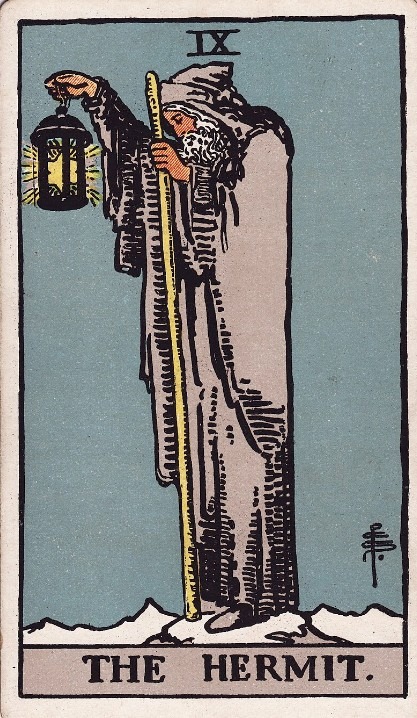
But if he moves on, the next card, the hermit, will offer hims some advice and guidance.
Join us for the next step on a walk through the tarot.
images my own, or copyright free from wikipedia commons and https://pixabay.com/